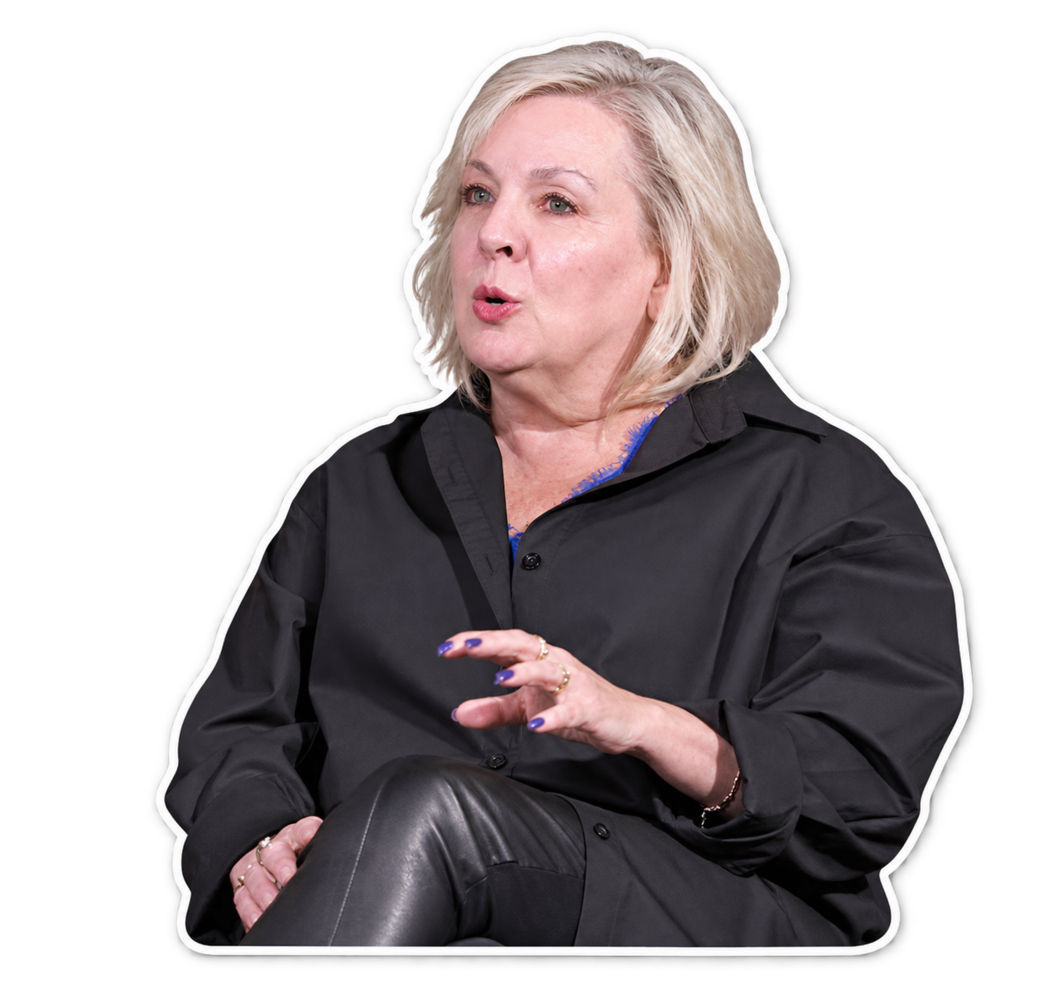
The question that changed her mind
Diana is the president and CEO of the Washington County Chamber of Commerce, and she told us she has been involved for 24 years. We recorded the conversation at M&M Marketplace in Hillsboro, in the business of Jaime, who she said she met when he was one of the chamber’s early members. The story about the seat on the committee is the one she kept coming back to. “It was a big awakening for me,” she said. Her work since then has been trying to make Latino business owners an integral part of the fabric of the county, not a seat held in reserve.
What a chamber is, and what it isn’t
The chamber’s own description, she told us, is about building networks and removing barriers where they exist, advocating on behalf of the business community and creating opportunities through education. Most business owners start with a passion, she said, and then discover they have to run payroll and marketing and wear all the other hats too. The chamber helps them find experts for those hats.
But she also explained something about language that anyone who markets to immigrant communities should hear. In many cultures outside the United States, a chamber of commerce means part of the government. So the chamber has had to work hard to tell people: we are not the government. There is, she said, distrust, and many business owners come from South or Central America, where selling anything meant going through layers of complications. Another myth she wanted to correct is that the chamber is only for Hillsboro. It is for all of Washington County.
Relationships before you need them
Diana’s central argument is relational. Meetings, she said, are where you find people who are fighting the same struggles and winning the same victories, and where you hear, “don’t step on that landmine, don’t do what I did.” She described how she herself met a mentor: a coach told her she should go and meet someone, and that is how the introduction to the chamber happened. She also made a line that stuck with us: “You have to create those relationships before you need them.” You will not sell even flowers, she said, without relationships, because thirty people are selling the same flowers and customers buy from the person they already know.
“You have to create those relationships before you need them.” — Diana, Washington County Chamber of Commerce
Teaching networking to people who hate it
She is not naive about how many entrepreneurs feel. Plenty of owners, she said, just want to do their thing in their business and do not like the part where you go out and tell people about it. The chamber teaches a class called the Art of Effective Networking, a one-hour session on how to attend a networking event and get a return on an hour of your time. She said you may never love it, but you will get more comfortable as you do it, and it is really about sharing yourself with another person.
The chamber also runs a monthly women’s business network, and the most recent meeting was a candle-making workshop. “It’s not just business,” she said. “It’s doing things together,” and from there you end up with a friend in business you can call and say, “I’m struggling with this.”
Your dollar is the strongest ballot
Her most quotable moment came in the middle of a discussion of how the Latino business community can strengthen itself. Support is great, she said, but turning it into commerce is what counts, because a chamber of commerce deals in dollars. “That’s the ultimate ballot you’re going to use to vote,” she told us. “Everyone can say anything, but your dollar speaks louder.” Stanford’s State of Latino Entrepreneurship report found that Latino-owned businesses grew 44% nationally between 2018 and 2023, and we cover the data in our article on the Latino impact in the U.S. and Oregon.
She also talked about the market shifts businesses must manage. If a business loses a significant part of its customer base, she said, regardless of whether it is Latino-owned or not, it has to figure out how to replace it. A chamber is a good place to introduce yourself and say, “I have this business and I need new customers.” She also recommended using AI tools to spark ideas when you are stuck, with the caveat that you should not hand the thinking over to them.
What the community needs right now
Near the end, Diana was direct about the moment. The chamber is not trying to duplicate the efforts of large organizations, she said; it is pointing people to the resources that exist. She asked the broader community of Washington County to do business with small businesses, noting that “our Latino community is especially hurt right now,” and to spend dollars locally. “The most important thing the Latino community needs right now is financial security,” she said, so families can feed their children. She closed by encouraging businesses to come to the chamber now more than ever, in Spanish or English. The chamber has bilingual materials, and, she said, sometimes it is just to say that everything is going to be okay.
Resources named in the episode include the Washington County Chamber of Commerce, the Latino Business Advisory Council, Centro Cultural de Washington County, Adelante Mujeres and M&M Marketplace. To see a business in the chamber’s orbit, read our feature on M&M Marketplace. Directed by Héctor Mendoza, produced by Xiomara Mérida. Eliora Studio.